Blog
Practical insights on AI implementation from operators who build, not theorize.
The AI Content Authenticity Playbook: Navigating the 2026 "Slopocalypse"
Most businesses are drowning in their own shortcuts. They treat AI as a set-and-forget content factory, then wonder why engagement drops and audience trust erodes.
The Next-Gen Model Smackdown: Strategic Infrastructure After the 2026 "Avocado" Leaks
Most businesses treat AI model selection like a loyalty program. They pick a vendor and assume the roadmap will keep them competitive.
The Autonomous Agent Reality Check: Moving From Chat to Action in 2026
Most businesses jump straight to autonomous agents and wonder why their systems trigger security alerts or fail in production.
The Forum Collapse: Rebuilding Your Internal Knowledge Base After the Death of Public Q&A
Public knowledge is drying up. For fifteen years, the default move when you hit a technical wall was simple: search Stack Overflow, scan Reddit, copy the fix, move on. That era is over.
The Authenticity Shield: Building Trust in the Era of "One-Person Hollywood"
Most marketing teams are making a binary mistake. They either avoid generative media because it looks fake, or they automate everything and then wonder why engagement collapses.
The Multi-Vendor Defense: How to Build AI Systems That Survive the Big Tech Wars
Most businesses are building their future on a foundation of sand. They pick a single AI provider, hard-code it into their operations, and hope the empire they chose stays on top.
The Knowledge Gold Rush: Why "What" to Build is the New Programming Currency
Most businesses are making a fatal mistake: they're still hiring for the how when the market has already moved to the what.
The AI Ethics Defense System: Protecting Your Operations from Tool Misuse and Backlash
Most businesses treat AI adoption like a digital gold rush - moving fast while ignoring the liability minefield beneath their feet.
The Claude Code Playbook: Building Specialized AI Teams for Large-Scale Codebases
Most software teams use AI as a glorified autocomplete and then wonder why technical debt keeps piling up.
The AI Hardware Arms Race: Strategic Procurement in the Era of the $20B Chip War
Most businesses treat AI compute like a utility - something you plug into, pay for, and forget about. That assumption is why nearly 90% of AI transformations fail before they ever scale.
The GPT-5.2 Reality Check: Separating "WTF" Math Breakthroughs from Business Value
Most businesses see a headline about AI solving a decades-old math problem and immediately wonder if they should double their compute budget. That instinct is how hype turns into waste.
The AI "Talent-Grab" Trap: How to Protect Your Tech Stack from the Next $20B Acquisition
Most IT leaders are sleepwalking into a vendor lock-in trap. They see multi-billion dollar AI deals and assume it's normal industry growth. It isn't.
The AI Solopreneur Stack: Building $1M Operations with Zero Full-Time Hires
Most solopreneurs hit a ceiling where more revenue requires more headcount. To reach a $1M run rate, they assume they need to hire a small team and absorb the overhead that comes with it.
The 2026 AI Agent Roadmap: From Experimental Assistants to Autonomous Co-workers
Most businesses are still treating AI like a faster version of Google Search. They use it to draft emails or summarize meetings, then wonder why their AI transformation hasn't moved the needle on the bottom line.
The AI Procurement Defense: Navigating the $20B Vendor Consolidation Loophole
Most SMBs are building their AI operations on a house of cards. They pick a favorite tool, embed it deep into core workflows, and assume the vendor will still exist in twelve months.
The Anti-Slop Content System: Maintaining Authority in the Age of AI Junk
Most businesses are flooding their channels with slop - low-quality, mass-produced AI content that lacks substance, effort, or meaning. It backfires.
The AI Agent Workforce Roadmap: Transitioning from Copilots to Autonomy
Most small businesses are stuck in the Copilot phase—treating AI as a smarter autocomplete for emails or a research assistant that still needs a human to click every button.
The Pixel-First AI Architecture: Beyond the Token Bottleneck
Most AI implementations fail because they treat every piece of data like a string of text. We've been conditioned to believe that tokenization - breaking words into numbers - is the only way an AI can read.
The GPT-5.2 Upgrade Strategy: When to Pivot Your AI Infrastructure
Most businesses jump straight to the newest model the moment it's announced, hoping for a magic fix for manual bottlenecks. They usually end up with broken integrations and zero measurable ROI.
The Classroom AI Integration System: Practical Deployment Framework for 2026 Education
Your teachers are already using AI. Your students definitely are. And you're stuck in the middle with no deployment plan, no integrity framework, and a growing fear that you're about to get this very, very wrong.
The AI Talent War Playbook: Competing for Engineers When Tech Giants Burn Billions
OpenAI closed a $40 billion funding round in March 2025, the largest private investment in tech history. The company's valuation hit $300 billion.
The AGI Compliance Playbook: Preparing Infrastructure When Government Mandates Strike by 2026
Two days ago, DefenseScoop broke the story: the Pentagon's fiscal 2026 defense bill includes a hard mandate to establish an AGI Futures Steering Committee by April 1, 2026.
The Enterprise AI ROI Framework: Measuring Real Impact When 75% Report Productivity Gains
Your teams are using AI. They're saving time. They're excited about the results. But when your CFO asks for the ROI, you're looking at spreadsheets that don't tell the real story.
The AI Content Fatigue Framework: How to Maintain Audience Trust When Viewers Are Rejecting Generic AI
Your audience already knows when you're using AI. They're just deciding whether to stay or leave.
The Autonomous Agent Reality Check: Testing AI That Claims to Work Unsupervised
Amazon just announced Kiro, an AI agent that supposedly codes independently for days without human oversight. OpenAI claims GPT-5.1-Codex-Max can run for 24 hours straight. Your inbox is flooded with vendors promising agents that work while you sleep.
The Generative Tool Evaluation System: Building Testing Infrastructure for Weekly AI Releases
DeepSeek dropped V3.2 on December 1st claiming GPT-5 performance. Claude Opus 4.5 hit 80.9% on engineering benchmarks three weeks ago. Google shipped Gemini 3 Pro with an entire development platform attached.
When New Models Actually Matter: A Decision Framework for Gemini 3 and Beyond
Most businesses chase every new AI model release. Here's how to separate genuine capability breakthroughs from vendor marketing and decide when infrastructure changes actually justify the cost.
The Medical Practice AI Readiness Framework: Preparing for Doctor-Level AI Assistants in Primary Care
Most medical practice managers see the headlines about doctor-level AI and assume they need to start buying software. That's backward.
The Weekly Model Refresh System: Building AI Infrastructure That Survives Constant Upgrades
Three flagship AI models dropped in twelve days this November. If your AI infrastructure broke or required weeks of rewiring during this release cycle, you're building wrong.
The AI Content Authenticity Playbook: Building Trust When Audiences Reject AI-Generated Media
Jack Dorsey just launched a video app that bans AI content entirely. OpenAI launched a social app built entirely on AI-generated videos. Both happened within two weeks of each other.
The AGI Timeline Framework: When Weekly Breakthroughs Don't Mean What You Think
Three major AI models launched in the past two weeks. Each announcement promised breakthrough capabilities. Each triggered the same question from business leaders: Is this AGI yet?
The 10-Million-Token Breakthrough: What Legal Teams Can Actually Do With Llama 4's Long Context
Meta released Llama 4 Scout in April 2025 with a 10 million token context window. That's 7.5 million words in a single AI session -- approximately 10 complete books or 15,000 pages of standard documents.
The Verifiability Advantage: Why AI Excels at Coding but Fails at Strategy
A July 2025 study found AI made experienced developers 19% slower. Understanding verifiability explains both that finding and where AI actually delivers measurable returns.
The AI Security Awakening: Building Defenses Before Automated Attacks Become Standard
In September 2025, suspected Chinese state hackers used Claude Code to target roughly 30 organizations -- tech firms, banks, chemical manufacturers, government agencies -- with an 80-90% automated campaign.
The AI Investment Reality Check: What $560 Billion Spent and $35 Billion Earned Actually Tells You
Before you lock in another AI budget, understand why 40% of CEOs see overinvestment warnings -- and how to separate genuine capability from circular financing.
The Creator AI Production Stack: Leveraging 2025's Tool Breakthroughs for Output Velocity
Most creators waste money stacking AI tools that add complexity instead of removing real bottlenecks. This post gives you a proven framework to evaluate, integrate, and quality-control a lean 2025 production stack that increases output velocity without sacrificing voice or accuracy.
The Multi-Vendor AI Architecture: Building Systems That Survive Platform Shifts
Most businesses pick one AI vendor and build everything around it. Then the vendor raises prices 40%, restricts API access, or gets acquired by a competitor.
The AI Model Reality Check: What Actually Works in Production vs The Hype
Most businesses pick AI models the same way they'd buy enterprise software in 2015: vendor demo, proof of concept with cherry-picked examples, then full deployment. Six months later they're explaining to leadership why the $50K AI investment delivers inconsistent results.
The AI Vendor Power Shift: How to Position Your Infrastructure as OpenAI, Google, and Anthropic Compete
Most companies chose their AI vendor 12-18 months ago and haven't revisited the decision. That worked when OpenAI dominated. It doesn't anymore.
The AI Vendor Wars Playbook: Strategic Positioning When Giants Collide
Most businesses treat AI vendor selection like a one-time platform decision. Pick OpenAI, Google, or an open-source model, then build everything on top of it. That worked fine when OpenAI was the only game in town and pricing was stable.
The Operations Intelligence System: AI-Powered Process Monitoring for Manufacturing
Most manufacturers collect vast production data but lack real-time intelligence to prevent failures and optimize workflows. Here's how AI agent networks transform reactive operations into proactive systems.
The Multi-Agent Orchestration Playbook: Building AI Teams That Actually Collaborate
Most companies hear about multi-agent AI systems and immediately spin up five assistants that talk to each other. Three weeks later, they're trying to figure out why Agent A keeps forgetting what Agent B did.
The Reasoning AI Decision Framework: When Standard Models Fail and o1-Class Tools Win
You're staring at your AI budget wondering why some tasks work great with ChatGPT while others fall apart. Then you hear about reasoning models like OpenAI's o1 that cost three to five times more and promise smarter results.
The Viral AI Playbook: Leveraging Social AI Trends for Business Visibility
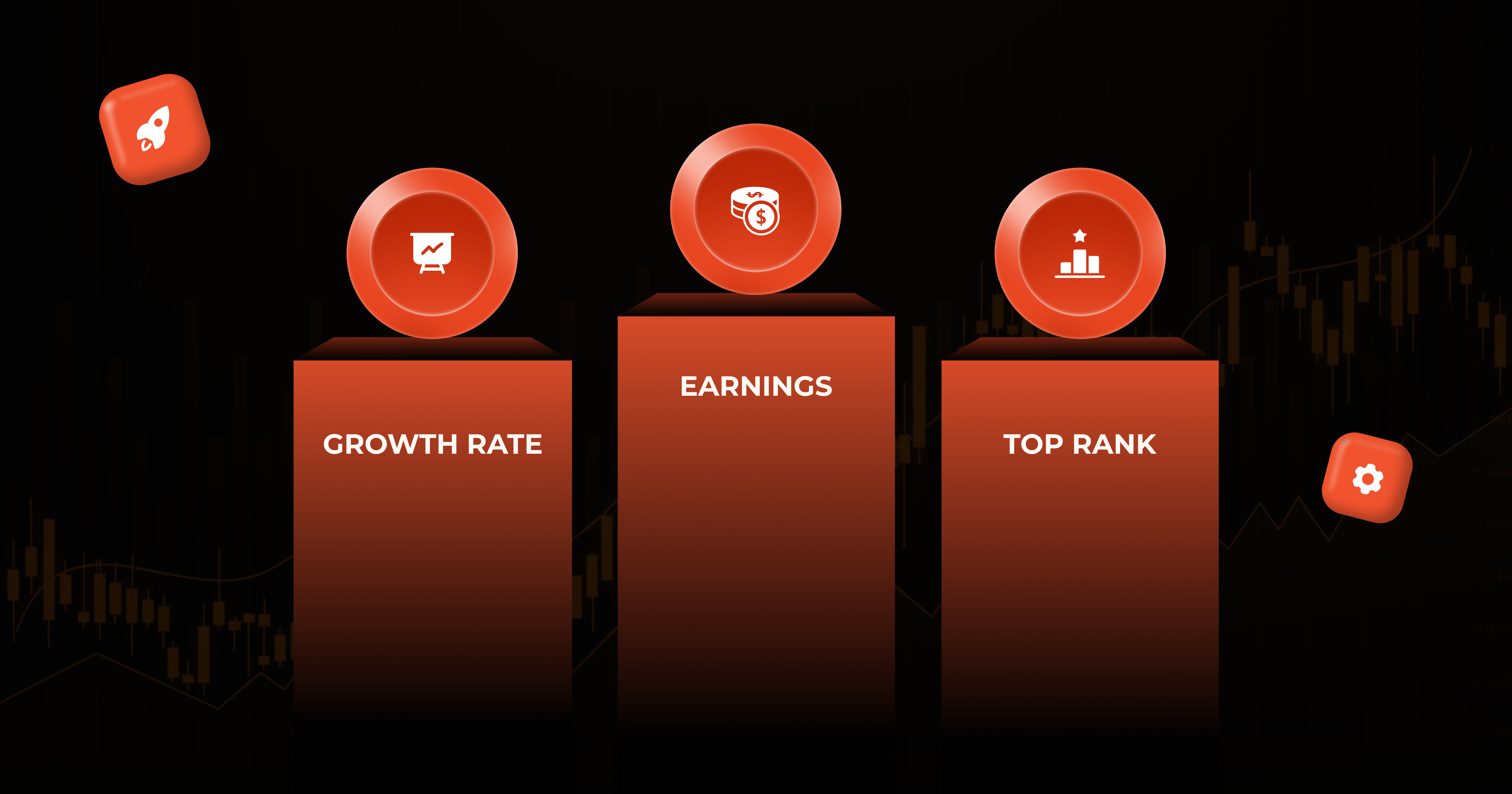
Most marketing teams chase viral AI trends without a framework to separate signal from noise. Here's how to evaluate, produce, and measure AI-social content that builds your business instead of embarrassing it.
The Three-Model Strategy: Building AI Systems That Survive Vendor Wars
Most IT leaders pick one AI model and build everything around it. Then the vendor raises prices by 40 percent, restricts API access, or gets outpaced by a competitor and the entire AI stack becomes a liability overnight.
The AI Agent Capability Map: What Actually Works in 2025 vs. The Hype
Most businesses waste months chasing autonomous AI agents that don't exist yet. This framework shows you what works now, what needs supervision, and what to avoid-based on 2025's technical reality, not vendor promises.
The Platform Dependency Audit: Evaluating AI Vendor Lock-In Risk Before It's Too Late
Most businesses realize they're locked into a single AI platform only after that platform changes pricing, deprecates a critical feature, or gets acquired. By then, migrating off costs months of work and tens of thousands in lost productivity.
The AI-First Workforce Transformation: From Literacy to Implementation
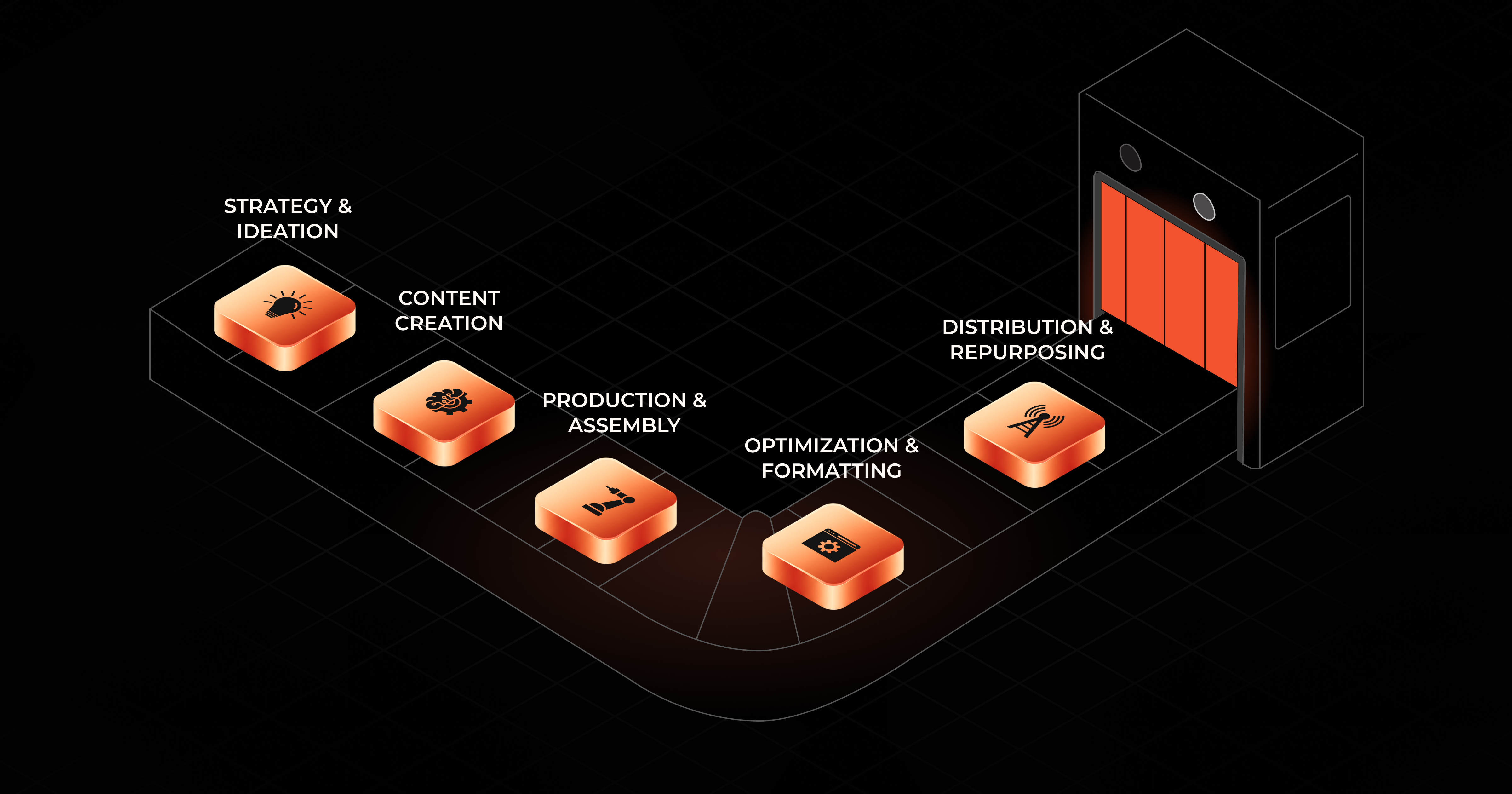
Your team doesn't need another AI awareness session. They need a systematic path from 'what is this thing' to 'I use this every day.'
The 10X Content System: How Creators Scale Output Without Losing Their Voice

Most content creators approach AI backwards. They see ChatGPT or Midjourney trending, jump straight to automation, and wonder why their content starts feeling generic.
The AI Risk Paradox: Why "Playing It Safe" Is the Riskiest Strategy
Most leadership teams approach AI the same way: cautious analysis, committee reviews, pilot programs that drag on for months. They call it "responsible adoption." The reality? They're confusing prudence with paralysis.
The AI Model Selection Framework: How to Choose Between GPT-6, Gemini, and Next-Gen Models Without the Hype
Most IT Leaders are doing AI model evaluation backward. They start with vendor announcements, compare benchmark scores from controlled environments, and try to parse marketing claims about "revolutionary capabilities."
Time-Boxing Your Way to Better Meetings: A Framework for Testing What Actually Works
You know your meetings could be better. Maybe they run long, maybe they feel unproductive, or maybe you're just not sure if the format you're using is the right one.
The Content Creator AI Production System: End-to-End Workflow Transformation
AI-generated video quality jumped from "obviously fake" to "wait, that's not real?" in under 30 months. For content creators, this isn't distant future speculation—it's an immediate operational question.
The AI Infrastructure Build vs Buy Decision Matrix: Complete Evaluation Guide
Stop guessing on AI infrastructure decisions. Use this 5-factor framework to evaluate build vs buy based on control needs, costs, team capability, timeline, and strategic positioning.
The AI Capability Gap Assessment: How to Diagnose Team Readiness Before You Deploy
Most AI projects fail because teams skip the readiness check. This 6-domain assessment framework reveals exactly where to invest before deployment—and prevents expensive failures.
The AI Governance Readiness Framework: Executive Strategy for Safe Scaling
Leading AI researchers are publicly expressing fear about technologies their own companies are building. When industry insiders who understand these systems at a technical level voice alarm, executives face a critical question.
The AI Stack Evaluation: A Step-by-Step Guide to Tool Selection
With xAI's Grok 4 Fast offering 2 million token context at rock-bottom prices while OpenAI commands a $500B valuation, the AI tool landscape has never been more complex—or more expensive to get wrong.
The Client AI Advantage: A Step-by-Step Guide to Service Excellence

Professional services firms using AI are delivering client results 40% faster while charging premium rates for "AI-enhanced expertise." Meanwhile, traditional firms are losing clients to competitors who've mastered AI-powered service delivery.
The AI Productivity System: How Smart Teams 3x Output Without Burning Out
While 40% of workers now use AI tools, most teams are operating in what I call "random AI mode" - individuals using ChatGPT for writing, Claude for analysis, and Jasper for content, with zero coordination.
The AI Integration Blueprint: A Step-by-Step Guide to Workplace Transformation
With AI adoption among workers doubling to 40% in just two years, you'd think businesses everywhere are crushing it with artificial intelligence. The reality? 90% of AI projects fail spectacularly.
Future-Ready Operations: Building Tomorrow's Systems Today
Over the past several years, WebLife's portfolio — spanning eight ecommerce brands — has generated over $250 million in sales by embedding agentic-AI workflows into its core operations. At Framework Friday, 'future-ready operations' means designing systems that adapt in real time, improve continuously, and return control to operators.
Inside our AI-Powered Ops Stack – Why n8n, LangChain & LangSmith are the Brains Behind our Next Leap
By late 2024, we recognized that 80% of a modern operator's day can be automated. After years scaling multi-brand eCommerce operations into the hundreds of millions, we saw the cracks in legacy tooling.
Litmus-Tested: How Framework Friday Prioritizes What to Automate First in FP&A - Smarter Automation Starts with Better Questions
Finance teams today face a different kind of pressure. Customer acquisition costs shift by the hour. Supply chains tighten and loosen without notice. The spreadsheet-based status quo doesn't cut it anymore.
Scale Without Burnout: How Agentic Workflows Unlock Healthy Growth
What if scaling your business didn't come at the cost of your team's well-being? At Framework Friday, we've learned that sustainable growth isn't about squeezing more hours from people — it's about designing systems that scale with you.
Reimagining FP&A through Agentic Workflows – From Automation to Strategic Intelligence
The role of FP&A (Financial Planning and Analysis) has continually evolved with technological shifts, and we are now at a pivotal moment. Traditional spreadsheet-heavy planning, backward-looking reports, and fixed budgeting cycles no longer meet the demands of today's fast-moving business environment.
How We Built and Evaluated AI Chatbots with Self-Hosted n8n and LangSmith
The first wave of AI chatbots focused on response generation. The second wave must focus on reliability. At Framework Friday, we build agentic systems that don't just talk — they trace, evaluate, and improve themselves.
What if you owned the systems that replaced your repetitive work?
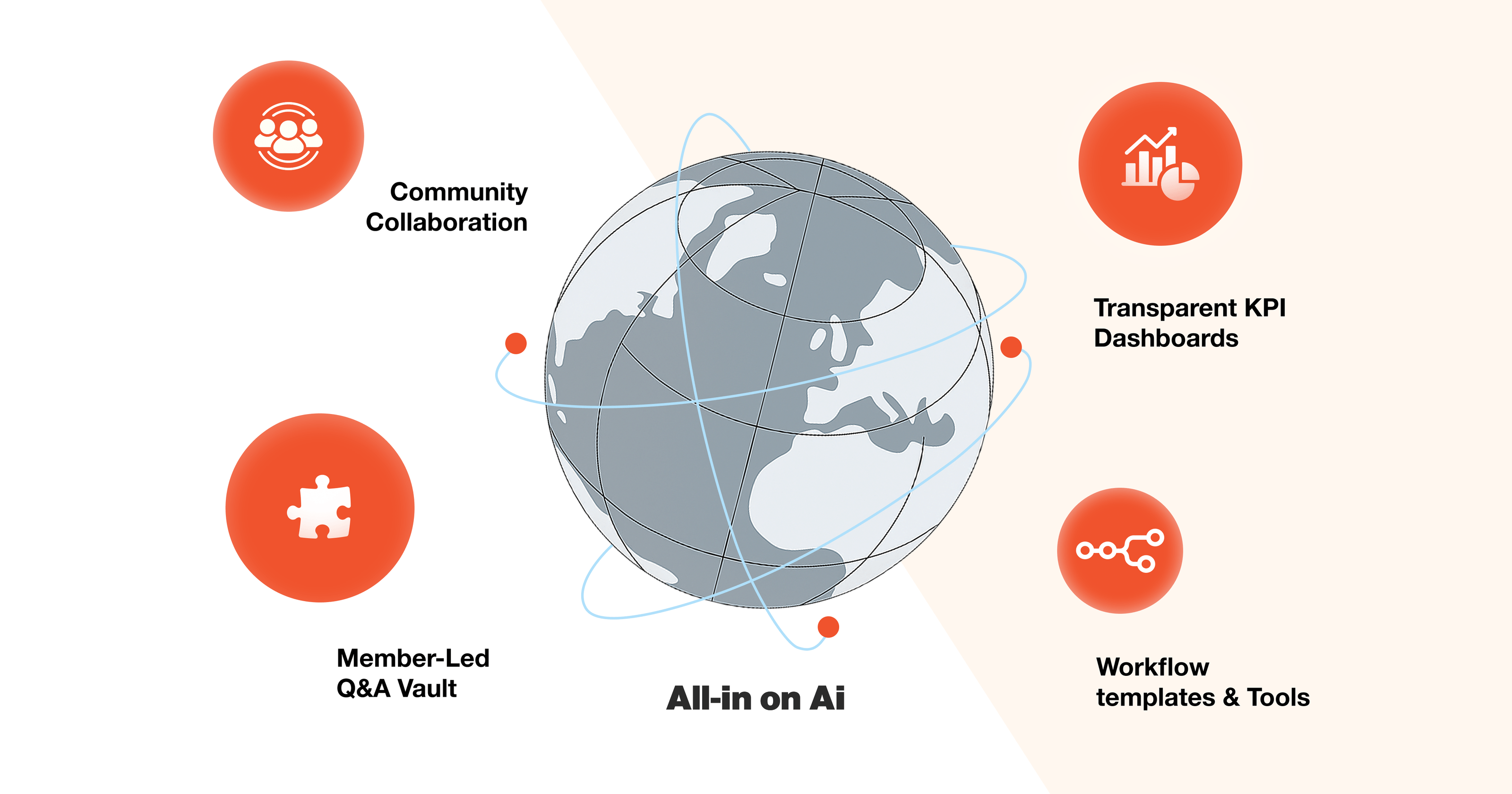
At Framework Friday, we don't just automate tasks — we help operators own the automations that power their business. Agentic systems aren't just tools you rent. They're workflows your team controls, improves, and scales.
Building Together: Why Community & Transparency Fuel our AI Journey

Breakthroughs in automation don't happen in isolation. At Framework Friday, we've learned that the fastest way to improve a system is to share it early, fix it together, and rebuild in the open.
From Human Tasks to Human Insights
What if your team spent most of their day on strategy instead of busywork? At Framework Friday, we believe automating routine tasks unlocks creativity — freeing teams from spreadsheet babysitting and allowing them to focus on growth.
Why Automation Matters (Real ROI)
What if you could see real, measurable gains from your next automation pilot? At Framework Friday, we believe automating routine processes isn't just a buzzword — it's a proven path to operational leverage.
Why LangSmith is the Backbone of our LLM Evaluation Stack
Building LLM workflows without evaluation is like flying blind. Inputs go in. Responses come out. But what happened in between? Was it helpful? Was it right?